

Somatic Stress Release and Meditation: Finding Peace in Uncertain Times

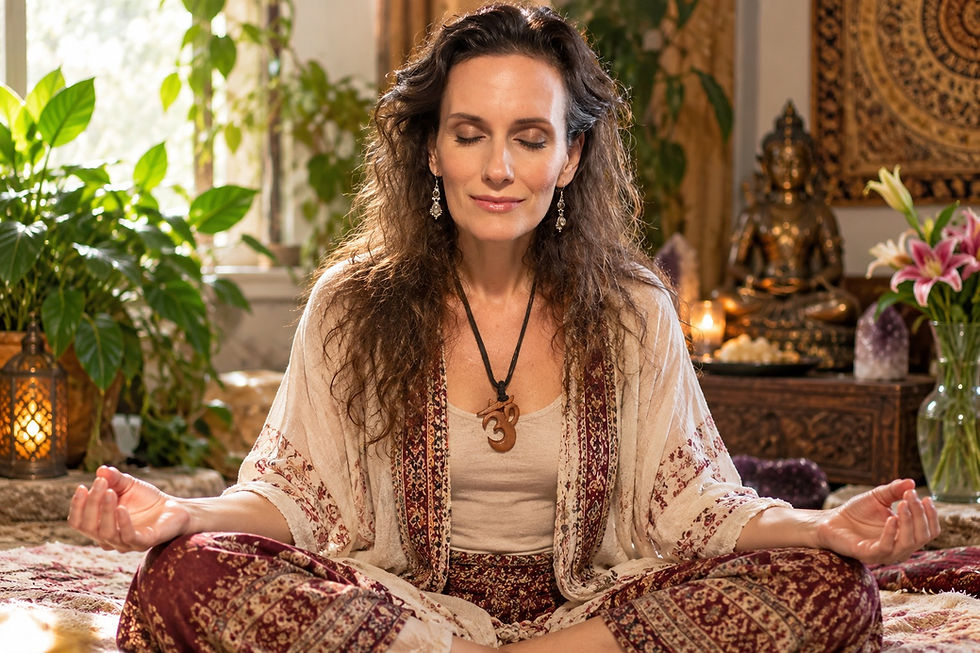
There are times in life when uncertainty seems to come from every direction.
Financial concerns, relationship challenges, grief, changes in our families, work stress, health concerns, unexpected transitions and uncertainty about the future can leave us feeling overwhelmed, anxious or disconnected from ourselves.
We may not always be able to change what is happening around us, but we can develop practices that help us return to ourselves.
Somatic Stress Release and meditation can offer two complementary ways of slowing down, becoming aware of what is happening within the body, and reconnecting with the present moment.
Rather than trying to force difficult feelings away, these practices invite us to become curious about what we're experiencing and discover ways of creating greater grounding, awareness and inner steadiness.
Understanding Somatic Stress Release
Somatic Stress Release is a body-centered practice that recognizes the relationship between our physical sensations, emotions and responses to stress.
When life becomes overwhelming, we may notice changes in the body before we fully understand what we're feeling emotionally.
Our shoulders may tighten.
Our breathing may become shallow.
We might clench our jaw, feel heaviness in our chest, experience tension in our stomach or simply notice that we don't feel completely present in our bodies.
Somatic practices invite us to slow down and notice these experiences.
Instead of immediately trying to make a sensation disappear, we can begin by asking:
What am I noticing in my body right now?
Sometimes simply bringing compassionate awareness to the body can begin changing our relationship with what we're experiencing.
Combining Somatic Awareness With Meditation
Meditation provides another way of returning attention to the present.
When meditation and somatic awareness are practiced together, we can include the body as part of the meditation rather than trying to escape from physical sensations, thoughts or emotions.
Here is a simple practice you can explore:
1. Find a Comfortable Position
Sit or lie down somewhere you feel comfortable.
Allow yourself a few moments to arrive before trying to change anything.
Notice the surface underneath your body and the support it is providing.
2. Notice Your Body
Slowly bring your awareness through your body.
Notice your feet, legs, pelvis, abdomen, chest, shoulders, arms, hands, neck and face.
You don't need to analyze what you find.
Simply notice.
Where do you feel relaxed?
Where do you notice tension?
Where do you feel warmth, heaviness, openness, movement or perhaps very little sensation at all?
3. Bring Awareness to Your Breath
Notice your natural breathing.
You don't have to immediately make the breath deeper.
After observing it for a little while, you might experiment with allowing the breath to become slower and more spacious.
Notice how your body responds.
4. Allow the Body to Soften
As you breathe, notice whether there are places that naturally want to soften.
Rather than commanding your body to relax, give it permission.
Your shoulders might drop.
Your jaw may soften.
Your belly may relax.
Or perhaps nothing changes immediately.
That's okay too.
5. Notice Thoughts and Emotions
Thoughts may arise during meditation.
Emotions may arise.
Memories may appear.
You don't have to chase them or push them away.
Notice what's happening and gently return your attention to your breath and body.
6. Explore Gentle Movement
If it feels good, allow yourself to gently rock, sway, stretch or move.
Somatic practice doesn't always require the body to remain perfectly still.
Sometimes movement can help us reconnect with ourselves and become more aware of what the body needs.
7. Return to Grounding
Feel your feet against the floor or notice the surface supporting your body.
Look around the room.
Notice where you are.
You might quietly remind yourself:
I am here. I am breathing. I can meet this moment one breath at a time.
Finding Grounding During Stressful Times
Different circumstances may call for different practices.
When you're worried about finances, work or the future, you may notice your thoughts racing ahead into situations that haven't happened yet. Bringing attention back to your feet, breath and immediate surroundings can help redirect your awareness toward the present.
During relationship stress, you might notice tightening in your chest, stomach or throat. Before immediately responding to another person, take a moment to notice what is happening within your own body.
During grief or major life transitions, meditation doesn't have to mean trying to become peaceful or making sadness disappear. Sometimes meditation simply gives us a place to sit beside what we're feeling.
And when life feels generally overwhelming, even a few minutes of conscious breathing, grounding or gentle movement can create an opportunity to reconnect with yourself.
A Simple Grounding Practice: 5-4-3-2-1
If you find yourself caught in racing thoughts or feeling disconnected from the present moment, you can also experiment with the 5-4-3-2-1 grounding practice.
Notice:
5 things you can see4 things you can physically feel or touch3 things you can hear2 things you can smell1 thing you can taste
The purpose isn't to make every difficult feeling disappear.
It's simply a way of bringing your awareness back to your immediate environment and reconnecting with the present.
Creating a Regular Somatic and Meditation Practice
You don't need to meditate for an hour every day to develop a meaningful practice.
You might begin with 5, 10 or 15 minutes.
Some days you may sit quietly.
Other days you may practice breath awareness, grounding, gentle movement or a body scan.
What matters more than performing meditation perfectly is developing a relationship with yourself.
Over time, you may begin recognizing your own patterns earlier.
You may notice when you're holding your breath.
You may recognize when your shoulders are tightening.
You may become more aware of when you need rest, movement, emotional support, grounding or simply a few quiet moments alone.
That awareness itself can become an important resource.
Somatic Stress Release as a Private Practice
Sometimes practicing independently is enough.
At other times, having another person present can provide additional structure and support as you explore what you're experiencing.
In my private Somatic Stress Release sessions, we can work with body awareness, breath, grounding, meditation, gentle movement, emotional awareness and other complementary practices according to your individual needs and comfort.
My work is not based upon forcing an emotional release or deciding what your body should be experiencing.
Instead, we begin with what is actually present and become curious about what your body may be communicating.
Depending upon the individual, I may also integrate complementary practices from my work with Breathwork, Meditation, Reiki and Energy Healing, Sound Healing, Yoga or bodywork.
Meditation, Grief and My Own Journey
Meditation isn't simply something I teach.
It has been woven through my own life, spiritual practice, healing and experiences of profound love and loss.
My meditation teachings have grown not only from years of study and practice, but also from living through experiences that required me to continually discover how to return to myself.
The loss of my beloved became part of that journey.
Grief can change our relationship with our bodies, our hearts, our spiritual lives and even our understanding of who we are. Meditation has offered me a place to be present with those experiences rather than believing that spiritual practice requires us to rise above them.
In the short video below, I share some of the personal story behind why I created my meditation training program and how my own experiences helped shape the work I teach today.
Continue Your Meditation Practice With Master Your Energy
For those who want to develop a deeper personal meditation and energy-awareness practice, my Master Your Energyteachings explore meditation, grounding, breath, energy awareness, the chakras, visualization, sound and practices that can be incorporated into everyday life.
The intention is not to become perfectly calm or spiritually unaffected by life.
Life continues to change.
We experience love, uncertainty, joy, grief, beginnings, endings and everything in between.
Our practice can become a way of learning how to remain connected with ourselves as we move through it.
Private Somatic Stress Release Sessions in Philadelphia
I offer private Somatic Stress Release, Breathwork, Meditation and complementary holistic healing sessions through Asttarte Deva Healing Wellness Center in Manayunk, Philadelphia.
Sessions are individualized according to what brings you in and what feels appropriate for you.
If you are curious about Somatic Stress Release or would like to explore whether private sessions are a good fit, you can begin with a consultation.
Schedule a consultation: Calendly.com/asttartedeva
Somatic Stress Release, meditation, breathwork and the other holistic practices described here are complementary wellness and educational practices. They are not substitutes for medical care, psychotherapy or licensed mental-health treatment.
Whatever may be happening around you, you can always begin again with something very simple:
Your body. Your breath. This moment.
With love,
Asttarte Deva
Asttarte Deva Healing Wellness Center


Comments