

Unlocking Inner Wisdom: The Transformative Power of Somatic Stress Release


Sometimes the body recognizes what we're experiencing before we have words for it.
Stress may appear as tight shoulders, a heavy chest, shallow breathing, restlessness, fatigue or a feeling that we simply cannot settle. Grief may come in waves. Anger may feel like heat or pressure. During periods of uncertainty or transition, we may feel disconnected from ourselves without fully understanding why.
Somatic Stress Release offers a way to slow down and listen.
Rather than approaching every uncomfortable sensation as something that needs to be immediately fixed, somatic practice invites us to become curious about what is happening within the body.
That curiosity can become a doorway into greater self-awareness, emotional understanding and connection with our own inner wisdom.
Listening to the Body
Many of us become accustomed to moving through life from the mind.
We analyze.
We plan.
We problem-solve.
We replay conversations.
We imagine what might happen next.
Meanwhile, the body is having its own experience.
Somatic Stress Release brings attention back to what is happening right now.
You might notice:
Tightness or pressure
Changes in your breathing
Restlessness or the desire to move
Heaviness or fatigue
Warmth or tingling
Emotional sensations
Areas that feel numb or difficult to connect with
A desire for grounding, stillness, sound or movement
There isn't a particular sensation you are supposed to experience.
The practice begins with noticing.
Making Space for Emotion
Sometimes physical sensations arise alongside emotions.
Sadness may appear.
Anger may surface.
There may be fear, confusion, disappointment, grief or even relief.
At other times, you may simply notice physical sensation without an obvious emotional story attached to it.
Both experiences are welcome.
Somatic work doesn't require you to force yourself into an emotional release or uncover a hidden explanation for everything you feel.
Instead, we can ask:
What am I noticing?
What happens when I stay present with this for a moment?
What does my body need right now?
Sometimes awareness itself begins to change our relationship with what we're experiencing.
Grief and Somatic Awareness
Grief is one area where body awareness can be particularly meaningful.
Loss doesn't always move through us in a predictable sequence. We may feel relatively peaceful one day and experience an unexpected wave of sadness another day.
Grief may coexist with love, anger, gratitude, longing, confusion and even moments of happiness.
Somatic awareness gives us another way of being with those experiences.
Rather than asking ourselves to hurry through grief, we can notice how it is showing up today.
Perhaps the chest feels heavy.
Perhaps the body wants to curl inward.
Perhaps we need movement.
Perhaps we need to breathe.
Perhaps we need rest.
Or perhaps today we feel lightness.
The goal isn't to manufacture an emotional experience. It is to develop a compassionate relationship with what is actually present.
Exploring the Inner Child
Somatic work can also create space for what is sometimes called inner-child exploration.
There may be moments when a present-day situation evokes feelings that seem surprisingly strong or familiar.
Instead of immediately judging those reactions, we can become curious about them.
What does this part of me need?
Does it need reassurance?
A boundary?
Permission to feel?
Permission to say no?
To be heard?
To rest?
Inner-child practices can include guided meditation, visualization, journaling, compassionate inner dialogue or simply noticing what happens in the body when certain memories or emotions arise.
The purpose isn't to rewrite the past.
It is to develop a more compassionate relationship with ourselves in the present.
Movement as a Form of Expression
Somatic Stress Release doesn't always happen while sitting quietly.
Sometimes the body wants to move.
Gentle stretching, rocking, shaking, walking, yoga-inspired movement, dance or other forms of spontaneous movement can provide another way of exploring sensation and emotion.
Movement doesn't need to look graceful.
It doesn't need to be performed for anyone.
You may simply notice:
If my body could move exactly as it wants to right now, what would it do?
For someone who spends much of life controlling, containing or analyzing their experience, allowing even a few minutes of intuitive movement can feel surprisingly freeing.
Meditation, Breath and Stillness
At other times, movement isn't what is needed at all.
Stillness may be more supportive.
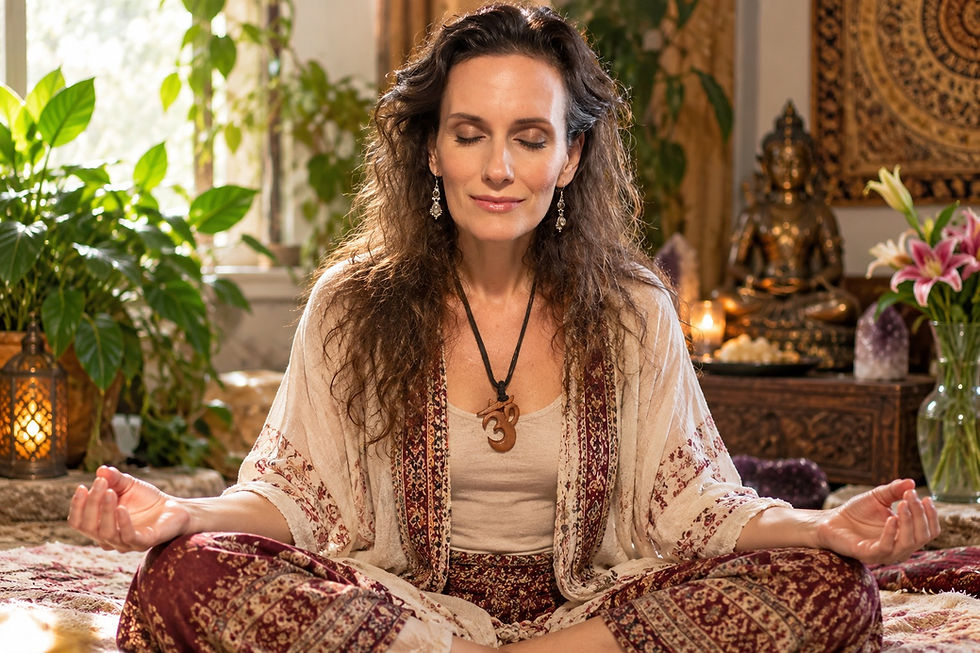
Somatic Stress Release can blend naturally with meditation and conscious breathing.
You might sit comfortably and notice where your body makes contact with the chair or floor.
Feel your feet.
Notice your breath without changing it.
Become aware of your chest, belly, shoulders and jaw.
Allow yourself to simply observe.
From there, you may choose to deepen your breathing, practice grounding or enter a guided meditation.
There is no single correct way to listen to the body.
Boundaries Are Part of Somatic Awareness
One of the most valuable aspects of body awareness can be learning to recognize our own boundaries.
Sometimes we know intellectually that something isn't right for us long before we give ourselves permission to respond.
Somatic awareness may help us notice the body's signals more clearly.
Perhaps we contract.
Hold our breath.
Feel ourselves pulling away.
Or perhaps we experience openness, ease, curiosity or a sense of being grounded.
These sensations don't have to dictate every decision we make, but they can provide useful information.
Learning to listen to ourselves—including recognizing when we need to pause, speak, change direction or say no—is an important part of developing a more conscious relationship with the body.
Reconnecting With Your Inner Wisdom
Inner wisdom doesn't necessarily arrive as a dramatic revelation.
Sometimes it is quiet.
It may be recognizing that you're tired.
Realizing that something still hurts.
Knowing that you need a boundary.
Feeling that you're ready for a change.
Discovering that you're not ready yet.
Recognizing that you need connection—or that you need space.
Somatic practice gives us an opportunity to become quiet enough to hear those subtler messages.
Over time, that can help create a relationship with ourselves based less on forcing and more on listening.
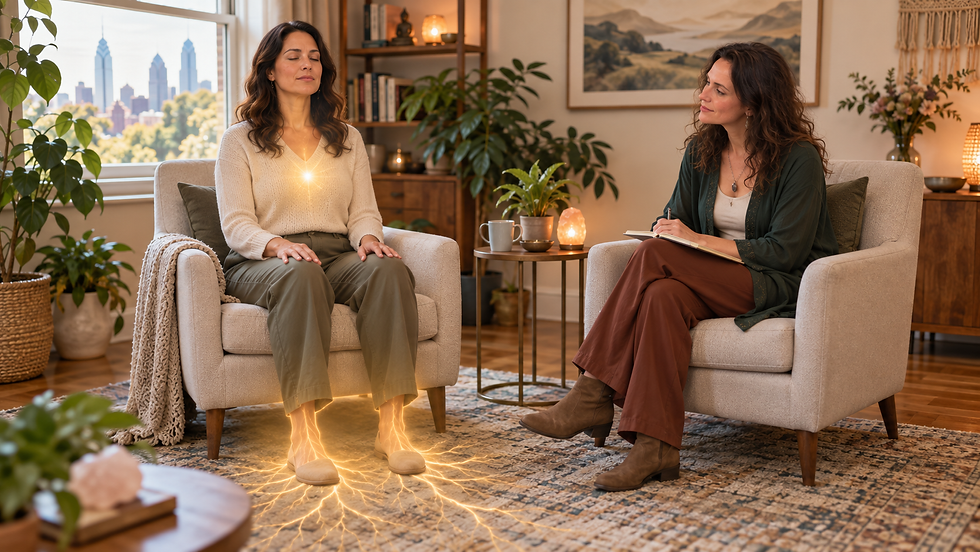
What Happens During a Private Somatic Stress Release Session?
Every session is individual.
We begin by talking about what you're experiencing and what you would like support with.
Depending upon your needs and comfort, a session may incorporate:
Somatic body awareness
Grounding
Conscious breathing
Meditation
Gentle or intuitive movement
Emotional awareness
Inner-child reflection
Visualization
Sound
Reiki or Energy Healing
Yoga-based practices
Support around boundaries and self-awareness
There is no expectation that you need to have a dramatic emotional experience.
Sometimes a session is deeply emotional.
Sometimes it is quiet.
Sometimes the work is primarily physical and grounding.
And sometimes the most meaningful outcome is simply feeling more connected with yourself than when you arrived.
Beginning Where You Are
You don't need to have everything figured out before beginning somatic work.
You may be experiencing stress.
You may be navigating grief or a major life transition.
You may feel emotionally overwhelmed or disconnected from your body.
You may simply want to understand yourself more deeply.
Somatic Stress Release offers a place to begin with something very simple:
What is happening inside me right now?
From there, we listen.
Not to force the body into becoming something different, but to develop a more compassionate, conscious relationship with ourselves.
Sometimes our inner wisdom has been there all along.
We simply needed enough quiet to hear it.
Private Somatic Stress Release Sessions in Philadelphia
I offer private Somatic Stress Release and holistic healing sessions through Asttarte Deva Healing Wellness Center in Manayunk, Philadelphia.
Sessions are personalized and may incorporate meditation, Breathwork, movement, Reiki and Energy Healing, grounding and other complementary practices according to your individual needs and comfort.
Schedule a consultation:calendly.com/asttartedeva
Somatic Stress Release and the complementary practices described here are wellness and educational approaches and are not substitutes for psychotherapy, medical treatment or licensed mental-health care.
With love,
Asttarte Deva
Asttarte Deva Healing Wellness Center
Comments